
Snap tonight’s homework. Your child practises exactly that.

Homework diary, spelling sheet, times table or lesson: Kamelo turns it into ten minutes of practice with a little chameleon who changes colour. You check everything before you hand over the phone. Year 1 to Year 6.
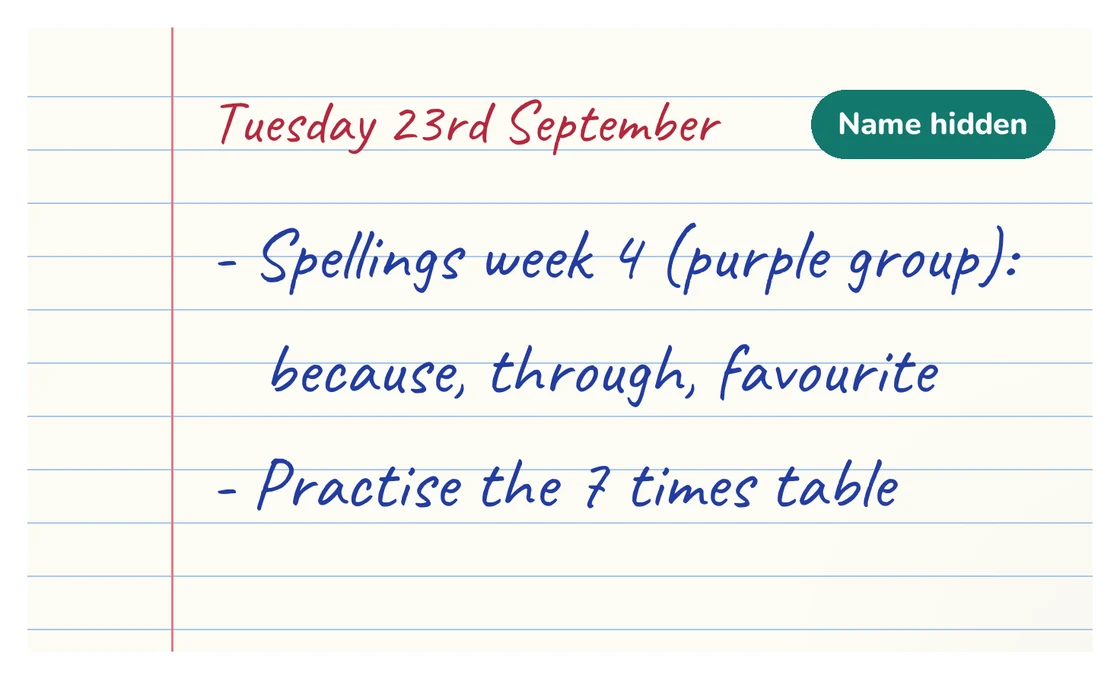
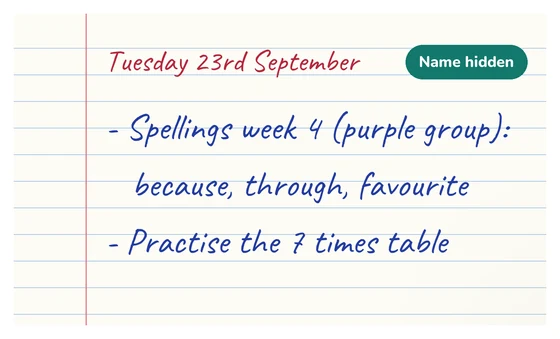
Photo of a homework diary page dated Tuesday 23rd September: ‘Spellings week 4 (purple group): because, through, favourite’ and ‘Practise the 7 times table’. Top right, the child’s name is covered by a ‘Name hidden’ label.
the name is hidden on your phone, before the photo is sent

An email on launch day

Kamelo isn’t in the app stores yet. Leave your email and we’ll let you know the day it’s available on the App Store or Google Play.

Your phone

Just that one email, then your address is deleted. No newsletter, no account to create. Planned for the UK in January 2027. France comes first, from October 2026.

Three things Kamelo doesn’t do

  • He never does the homework for your child.

    He reads out spellings, asks times tables and helps with learning a poem. The right answer only appears once your child has had a go, so they can correct themselves, and anything missed comes back later.

  • He doesn’t chat with your child.

    Everything he says is written in advance. Your child never types a message to an artificial intelligence.

  • He shows nothing you haven’t checked.

    The AI reads the photo for you; you confirm the exercise before it reaches your child. Lesson questions written by the AI are labelled as such.

Thomas a parent in France, and the maker of Kamelo
How it works

Five steps, about ten minutes in all. You stay in charge: your child only sees what you have confirmed.

  1. Take a photo

    The homework diary, a spelling sheet, a printed slip or a screenshot from the school app, handwritten or printed. Your phone crops the photo and hides your child’s name before it is sent.

    The homework diary photo, with the child’s name hidden.
  2. Kamelo gets it ready

    In about thirty seconds, he reads the page, works out what the homework is (spellings, times tables, a poem, a lesson…) and turns it into practice on exactly those words.

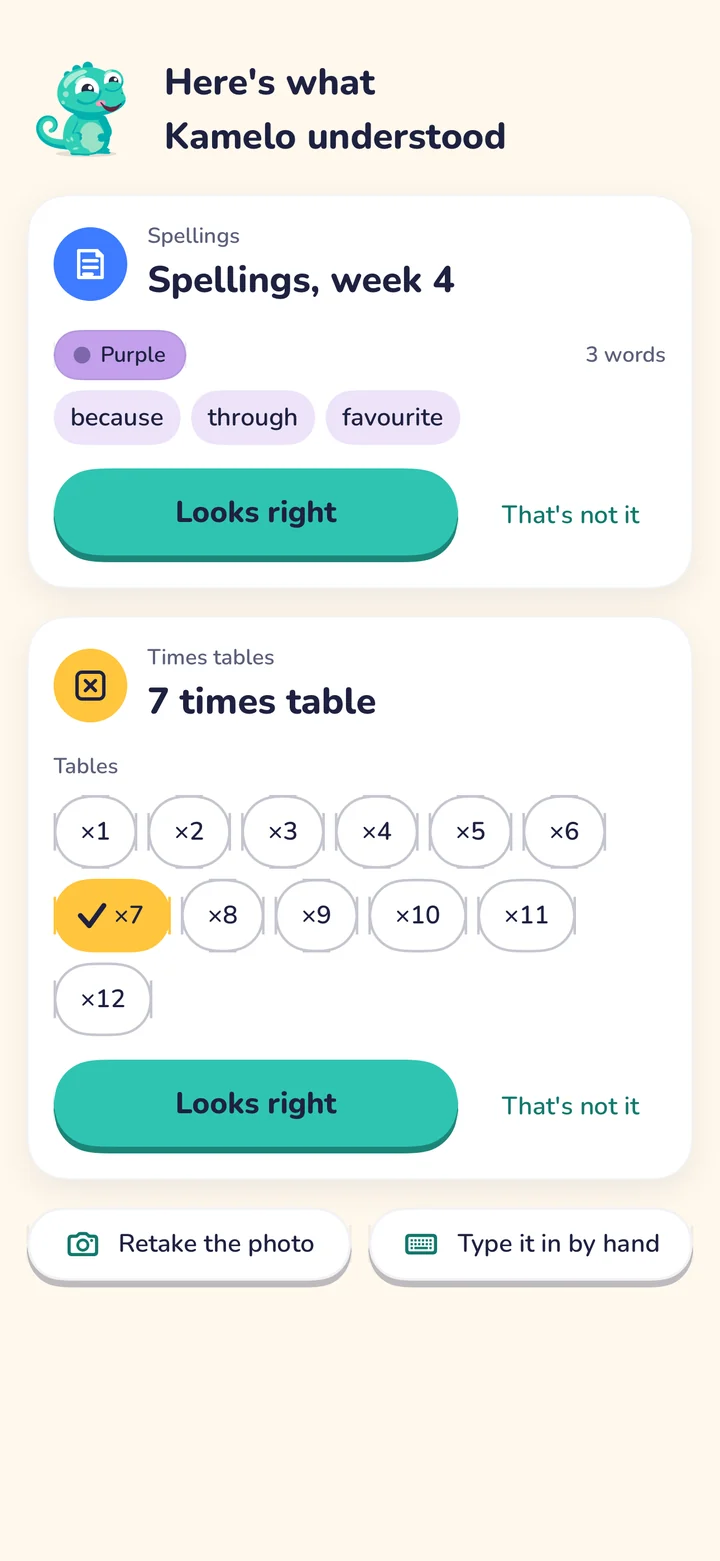
    The ‘Here’s what Kamelo understood’ screen: spellings, week 4, purple group, 3 words: because, through, favourite.
  3. You check it

    Kamelo shows you what he read on the photo: the words, the times table, the questions. A word misread? Tap it to correct it, then confirm. Nothing reaches your child until you have confirmed it.

    Under each piece of homework Kamelo found, a ‘Looks right’ button and a ‘That’s not it’ link; for the 7 times table, the tables from ×1 to ×12, with ×7 ticked, to change with a tap.
  4. Your child practises

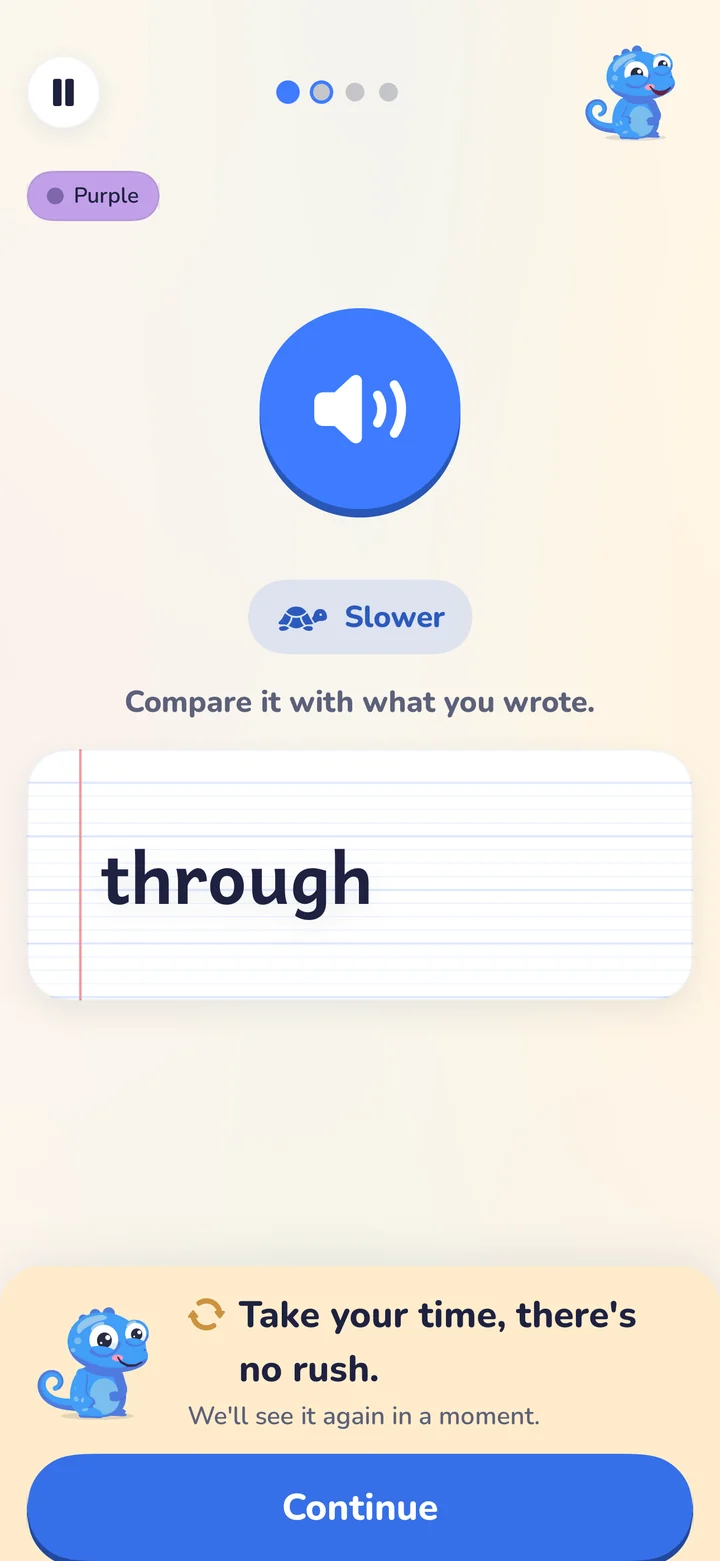
    Kamelo says each word, your child writes it down on paper, then checks it themselves. About ten minutes, no timer and nothing in red: a mistake is an ‘almost’, and the word comes back a little later.

    A spellings screen: the big button to hear the word again, ‘Slower’, then ‘Compare it with what you wrote’ and the word ‘through’ on an exercise-book line.
  5. Kamelo celebrates

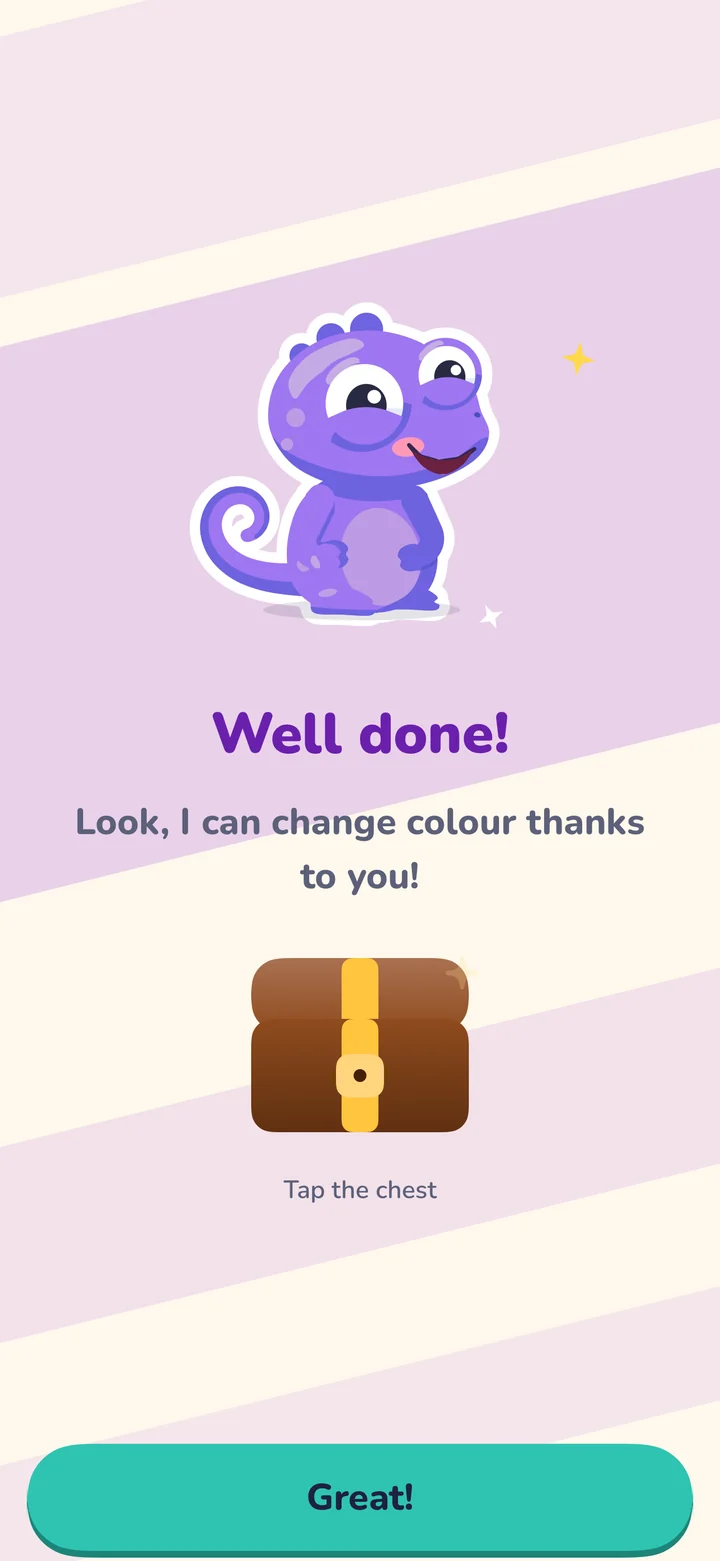
    Once today’s homework is done, Kamelo celebrates with your child. For you, the parent space shows what is secure and what will come back, in plain words: ‘Spellings: 2 of 3 first time’.

    The end of the session: Kamelo, now purple, says ‘Well done! Look, I can change colour thanks to you!’

Every step in detail

Try Tuesday’s spellings

On the photo: ‘Spellings week 4 (purple group): because, through, favourite’. Here is what your child does with it in Kamelo, in paper mode: listen, write the word down, then check it themselves.

  • Paper first. Your child writes for real, on paper or a mini whiteboard. There is a keyboard mode too, if you prefer.
  • Never ‘wrong’. A mistake is an ‘almost’, and the word comes back a little later.
  • At their own pace. The word can be played as often as needed, and a ‘Slower’ button says it again more slowly.
Purple

Write the word on paper or on your whiteboard

What Kamelo can read in the homework diary

The homework primary schools in England set every week, recognised from the photo, handwritten or printed. Each line becomes its own exercise.

Homework Kamelo can’t turn into practice yet, such as ‘Read for 15 minutes and sign the reading record’, becomes a task to tick off. You can also send it to us from the app: that is how Kamelo learns new exercises.

And what about your child?

This is Kamelo as he is in the app: he breathes, blinks, follows your pointer and giggles when you tap him. Pick a subject.

  • He takes on the colour of the subject.
  • A mistake? It’s an ‘almost’, never red.
  • Colours to earn and stickers to collect. Nothing to buy.
  • After 8.30pm he falls asleep, and homework is over for the day.

When today’s homework is done, Kamelo celebrates with a somersault.

Privacy, from the very first photo

Kamelo is used by children. So it collects as little as possible, and says so plainly.

The corner of the homework diary page: the child’s name is covered by the ‘Name hidden’ label.
hidden here, on your phone
The name hidden before upload
The app crops the photo, removes its metadata and hides the name and class at the top of the page, on your phone.
The photo deleted within 24 hours
It is only used to read the homework. Only the exercise you confirmed is kept.
Hosted in Paris
Your family’s data stays in the European Union. Reading the photo is done by Claude, Anthropic’s AI, with your consent; without it, typing the list in by hand always works.
No ads, no trackers for your child
No analytics in your child’s space, nothing to buy, and no link out of the app without your parent code.

PS: and how much does it cost?

Free

£0

  • 3 photo scans in your first 14 days, then 1 a month
  • Unlimited typing-in
  • Unlimited replays of exercises already created
  • One child profile

Kamelo Premium

£49.99 a year

or £7.99 a month

  • Unlimited scans (fair use)
  • Up to 3 children on one subscription
  • The detailed summary: results for each exercise, words to review
  • 7-day free trial on the annual plan

No ads, and no selling of data. Cancel at any time in your phone’s settings.

Full pricing details

A word from Thomas

I’m the parent of a primary school child in France, and an independent developer. Kamelo started at home, as a little spelling game for the colour-group word lists my child’s class brings home.

I turned it into an app for one simple reason: so that evening homework is a short moment, spent on what the teacher actually set, with no ads and without the app doing the work instead of the child.

I build Kamelo on my own, in France. The version for families in the UK follows the English national curriculum: Year groups, weekly spellings, the statutory word lists and the Year 4 multiplication tables check. If something isn’t right, write to me: I read every message and reply myself.

Thomas Sobstylparent, and the maker of Kamelo

The story of Kamelo

Questions parents ask us

Does Kamelo do the homework for my child?

No. Kamelo never does the homework and never hands over ready-made answers. It turns the homework into practice (spellings, times tables, a poem to learn, questions on the lesson) and your child does it themselves. The right answer only appears after they have had a go, so they can correct themselves.

Will my child be talking to an AI?

No. The AI only reads the photo, on the parent’s side. Kamelo the character only says lines written in advance, and your child never types anything to an AI.

What if the photo is misread?

You always see what Kamelo understood before you confirm it. Tap a word to correct it, and if the handwriting really won’t cooperate, type the list in yourself: it only takes a moment.

Can it help with the Year 4 multiplication tables check?

Kamelo has a practice mode in the same format as the check: 25 questions, 6 seconds each, on the tables you choose. It is off by default and only a parent can switch it on. It is not the official check, which children take at school in June, and which has no pass mark. More about the check.

Which year groups is it for?

Year 1 to Year 6, for children aged 6 to 11. It follows the English national curriculum: weekly spellings, common exception words, the statutory word lists for Years 3 to 6, times tables and number bonds.

When does Kamelo come out in the UK?

It’s planned for January 2027, on iPhone, iPad and Android. France comes first: the launch there is planned for 17 October 2026. Leave your email on the reply slip and we’ll tell you the day it comes out in the UK.

Tonight’s homework, without the fight.

Kamelo is planned for the UK in January 2027, on iPhone, iPad and Android. One email to tell you on the day, then your address is deleted.

An email on launch day

Kamelo isn’t in the app stores yet. Leave your email and we’ll let you know the day it’s available on the App Store or Google Play.

Your phone

Just that one email, then your address is deleted. No newsletter, no account to create. Planned for the UK in January 2027. France comes first, from October 2026.